How to Remove Tea, Wine, Grass and Oil Stains from Linen
Tea across a tablecloth. A glass of red knocked over onto a linen napkin. Green knees after a picnic, a slick of olive oil on a shirt cuff. Linen is forgiving about all of them — flax fibre is stronger wet than dry and releases stains more readily than most synthetics — but only if you deal with them in the right order. Rub hard and you push the colour deeper into the weave. Reach for chlorine bleach and you weaken the fibre and leave a yellow patch behind. What follows is a stain-by-stain method using things most UK kitchens already have in a cupboard.
Three rules before you touch anything
- Blot, don't rub. Press a clean cloth or kitchen roll onto the stain, working from the outside in. Rubbing spreads the mark and roughs up the surface of the cloth.
- Work from the wrong side. Hold the stained area face-down over a bowl and let water push the stain back out the way it came in.
- Keep heat out of it. Hot water and a tumble dryer set stains, particularly anything containing milk, egg or blood. Wash cool or warm first, air-dry, and only use heat once you know the mark has gone.
Test anything you plan to use on a hidden corner first — an inside hem or seam allowance — especially on dyed or vintage linen. And no chlorine bleach, ever. It attacks the cellulose in flax and will eventually yellow and weaken the cloth.
Tea and coffee
Tea is a tannin stain, the same family as red wine and fruit juice, so the treatment is similar. If the tea was milky, flush with cool water first; hot water will cook the milk protein into the fibre. Once the milk is out, you can move on to warm water.
- Rinse the stain under cool running water from the wrong side of the fabric.
- Spread a paste of bicarbonate of soda and water over the damp mark, leave for 20 to 30 minutes, then rinse.
- For anything stubborn, or on white linen, soak in an oxygen-based stain remover powder dissolved in warm water. Thirty minutes handles a fresh mark; an old one may need several hours.
- The old lemon juice and salt trick works on white linen, but the acid and sunlight can lighten dyed cloth and weaken fibre with repeated use. Rinse it out thoroughly and don't leave it sitting.
Red wine
Speed matters more here than with anything else on this list. Wine that is still wet lifts easily; wine that has dried and been through a wash is a longer job.
Blot up what you can. Salt scattered on a fresh spill will draw some of the liquid out, and it is worth doing if the cloth is still on the table, but don't rely on it alone. Flush with cool water, then treat with oxygen bleach — the most reliable thing there is for tannin colour. A dilute white vinegar rinse can shift the last greyish trace, though you should rinse well afterwards. At every stage, blot rather than scrub.
If the wine has already dried, soak the item in oxygen bleach and warm water for several hours or overnight, then wash as normal, and repeat the soak if a faint shadow remains. Do not put it near an iron or a tumble dryer until the colour has gone. Heat fixes wine stains permanently.
Grass
Grass stains are chlorophyll plus plant proteins and sugars, and they respond to solvents as well as detergent. Keep the water cool at first, for the protein side of things.
- Dab the mark with methylated spirits on a clean cotton pad, working from the outside of the stain inwards. It is the quickest way to shift the green. Use it in a ventilated room, well away from any flame.
- Rinse, then work in neat washing-up liquid with your fingertips or a soft brush and leave for 15 minutes.
- Wash with a biological detergent at the warmest temperature the care label allows. That usually finishes the job.
- If a faint yellow-green remains on white linen, follow with an oxygen bleach soak.
Oil, grease and anything oily
Butter, olive oil, salad dressing, sun cream, a splash of curry — these are grease stains, and detergent does the work. The trick is to get the bulk of the oil out before the cloth goes anywhere near water.
- Blot off what you can with kitchen roll.
- Cover the mark with cornflour or talc and leave for 15 to 20 minutes, then brush it away. This lifts a surprising amount of oil.
- Apply neat washing-up liquid and work it in with your fingertips. Leave for 10 to 15 minutes.
- Wash at the highest temperature the care label allows. Warm or hot water is fine here — grease needs it.
- For a mark that has already been washed and dried in, dissolve a tablespoon of washing soda in a basin of hot water and soak for 30 minutes before washing again. Wear gloves; it is alkaline.
When the stain is old, or already washed and dried
Don't escalate to something harsher; repeat instead. Soak in oxygen bleach and warm water for several hours, agitate the cloth gently, rinse, and wash. Two or three rounds of a mild treatment do far less damage than one aggressive one, particularly on older linen that has already given decades of service.
Drying, ironing and what to avoid
Air-dry linen whenever you can, out of direct sun if it is dyed or coloured. Skip the tumble dryer until you are certain the stain has gone, because the heat will fix whatever is left. Iron linen while it is still slightly damp, on the reverse, with a medium-hot iron — and never iron over a stain you can still see, as you will press it into the weave. If the piece is vintage, deeply dyed, or labelled dry clean only, a professional cleaner is worth the cost.
The cupboard kit worth keeping
- Bicarbonate of soda
- An oxygen-based stain remover powder
- Washing-up liquid
- Methylated spirits
- Cornflour or talc
- White vinegar
None of it is specialist, and all of it will see off the four stains above. The rest is patience: blot, treat, rinse, repeat, and let the cloth dry completely before you decide whether the mark has really gone.
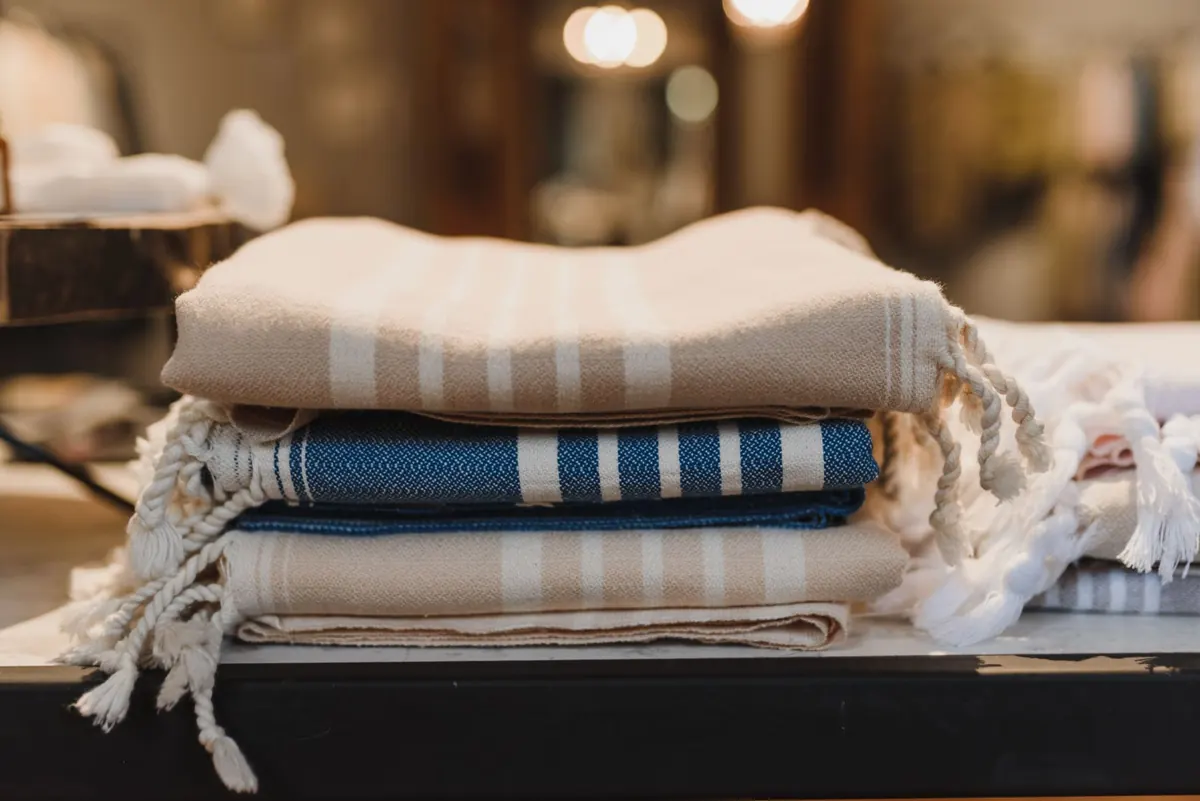
Photo: monileoni / Pixabay

You Might Also Like
Practical ways to use linen bedding and pyjamas, plus a ventilation routine, to sleep comfortably through a British heatwave.
A practical guide to storing towels, bath mats and laundry in a compact UK bathroom — keeping everything dry, tidy and easy to reach without a bigger room.