Linen Napkins vs Paper Napkins: Cost and Style for Entertaining
There is a quiet moment before guests arrive, when the table is almost finished and you reach for the napkins. What you pick up says something about the meal ahead, and it also shapes the next hour of your life: whether you are rummaging in a cupboard for a spare packet, or carrying a laundry basket to the machine the following morning.
Paper napkins and linen napkins are not really rivals. They solve different problems. One is cheap, disposable and forgiving. The other costs more at the till and then repays you for years, if you treat it kindly. Choosing between them for everyday suppers and for occasions comes down to four things: upfront cost, laundering effort, how they look on the table, and what you throw away.
The Upfront Cost, Honestly Compared
Paper napkins are the cheapest way to put something beside a plate tonight. You buy a pack, use them, and buy another. The outlay is small, predictable and asks nothing of you afterwards. The catch is that the spending never stops. If you entertain often, you will be buying paper napkins for as long as you host.
Linen costs more in one go. A set of six decent napkins is a proper purchase, not an afterthought at the supermarket till. Divide that price by the number of dinners, Sunday lunches, birthdays and Christmas tables it will sit through, and the sums start to look different. Good linen napkins last for years, often decades, and get softer and more pleasant with every wash.
Here is where the money actually goes when you buy linen:
- Fabric weight. A substantial, tightly woven linen holds a fold, absorbs a spill and drapes properly. Thin fabric skimps on all three.
- Finishing. A neat hem, or a hand-finished hemstitch, is what keeps a napkin from fraying after twenty washes.
- Colour and dyeing. Natural, undyed linen and well-dyed deep shades age more gracefully than cheap brights that fade unevenly.
- Size. Larger napkins suit a formal dinner; smaller ones are fine for drinks and cake.
If the upfront price puts you off, buy six rather than twelve and add to the set over time. Vintage and second-hand linen is often better made than new, and a mismatched assortment looks charming rather than careless.
Laundering, Ironing and the Effort Nobody Mentions
Paper wins the immediate comparison because there is nothing to wash. But it has its own labour: keeping the drawer stocked, emptying the bin more often, and watching a napkin blow across the garden while someone reaches for a fresh one.
Linen asks for a rhythm rather than a lot of time. Shake off crumbs, wash with similar colours on a warm cycle, skip the fabric softener, and dry on a line or a low tumble. Press while still slightly damp, or embrace the crease and roll them loosely in a drawer. Linen creases; that is part of what it is. If ironing irritates you, choose a washed, deliberately rumpled finish and stop apologising for it.
For spills, act quickly. Blot, rinse in cold water before the stain sets, and treat red wine sooner rather than later. A napkin that ends up with a faint mark simply gets promoted to the everyday stack.
How They Look at the Table
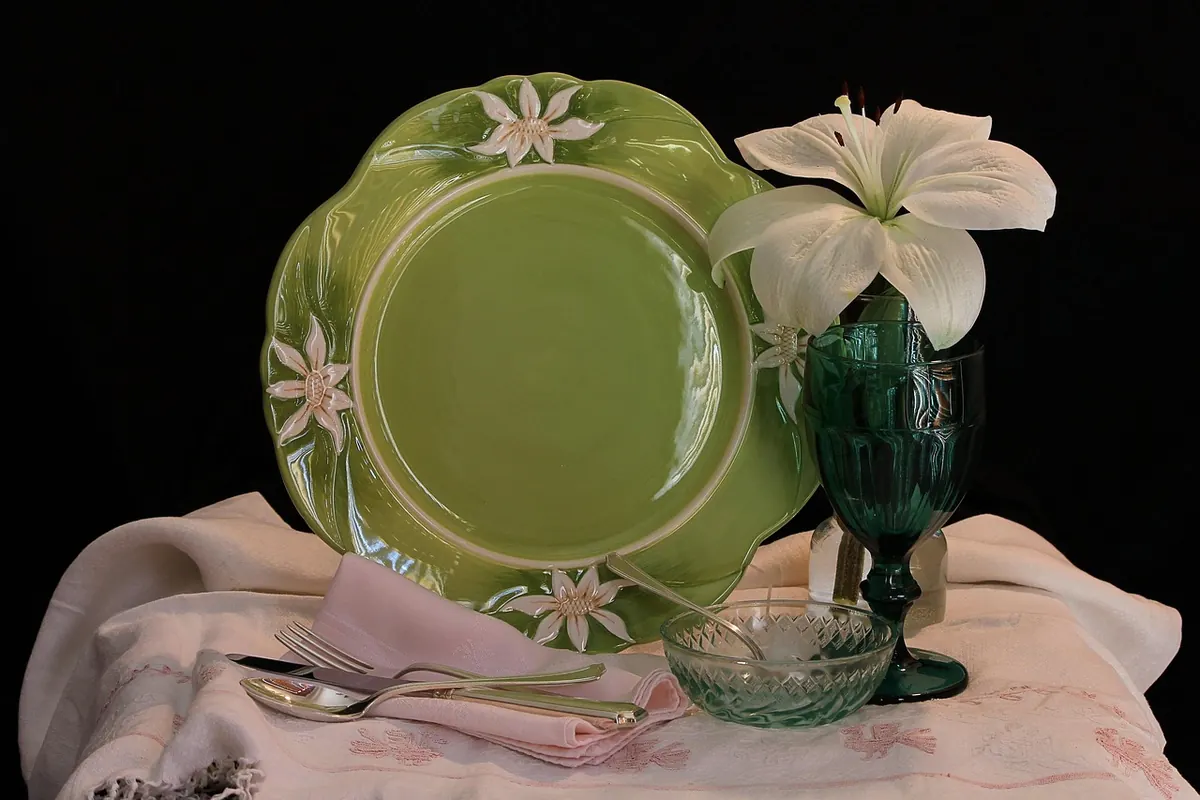
This is where linen earns its keep. It has weight and drape. It catches candlelight. Folded into a glass, tied with a strip of ribbon, or simply laid flat under a fork, it makes a table look considered without any extra effort.
Colour does a lot of work here. White and oatmeal are endlessly useful. Sage, ochre, clay and deep indigo lift a plain tablecloth. Mixing two or three shades across a long table looks relaxed and deliberate at once.
Paper can look good too, and it is worth saying so. Thick, textured, block-printed paper napkins can be genuinely handsome, and they are unbeatable for a barbecue, a buffet, a children's party or any meal where forty people might turn up. The problem is only ever the thin, shiny sort that disintegrates on contact with a tomato. If the look matters, the quality of the paper matters just as much.
Waste and Everyday Practicality
Every paper napkin becomes rubbish within an hour. Some are marketed as compostable, but many only break down under industrial conditions, not in a home heap, so check before you assume.
Linen uses water and energy each time it is washed. Neither option is free of impact. The practical difference is volume: a linen napkin that serves hundreds of meals keeps hundreds of paper ones out of the bin.
For a Tuesday night with spaghetti and small children, paper or a battered linen set both make sense. For a birthday, an anniversary or a long Sunday lunch, linen changes the feel of the room.
A Quick Way to Decide
Work through these questions honestly and the answer usually appears on its own:
- How often do you host? Monthly or more, and linen starts to pay for itself in both money and pleasure.
- How many people sit at your table? Large, changeable numbers favour a paper supply plus a set of twelve linen for occasions.
- Do you have a laundry rhythm? If washing happens weekly anyway, napkins add almost nothing to the load.
- How do you feel about stains? If a mark would ruin your evening, keep the good linen for drinks and dessert.
- What is the occasion? Match the napkin to the mood, not to a rule.
The Practical Answer for Most Households
Keep both, and stop treating it as a competition. Store a stack of good paper napkins for big, messy, casual gatherings where speed matters. Build a linen set for the meals you want to remember, starting with six in a colour you actually like, then adding two or four when you spot a bargain.
Wash linen after every use, or air it and reuse it for the same guests at a relaxed weekend lunch. Roll rather than press if ironing is not your thing, and keep a slightly marked set for everyday. Looked after that way, a modest pile of linen napkins will outlast most of the other things on your table, and the question of which to reach for before guests arrive becomes an easy one.
Photo: JamesDeMers / Pixabay
You Might Also Like
Practical ways to use linen bedding and pyjamas, plus a ventilation routine, to sleep comfortably through a British heatwave.
A practical guide to storing towels, bath mats and laundry in a compact UK bathroom — keeping everything dry, tidy and easy to reach without a bigger room.