How to Wash Linen Bedding Without Shrinking It
Linen bedding has a reputation for two things: feeling cool and crisp on a warm night, and shrinking the first time you wash it carelessly. Only one of those is inevitable. Flax fibre does contract slightly when it meets heat and agitation, but the difference between a fitted sheet that still fits and one that pings off the corners usually comes down to three decisions — temperature, detergent and drying.
What follows is a straightforward routine, written for the way we wash here in the UK, for anyone who wants their bedding to stay soft, keep its size and last for years rather than one season.
Why linen shrinks in the first place
Linen is woven from flax, a fibre that swells as it absorbs water and tightens as it dries. Add heat, plus the friction a washing machine drum creates, and the weave contracts. Most good bedding is pre-washed or stonewashed at the mill, so it arrives partly shrunk already. That first wash at home might still take up a small amount — a centimetre or two across a king-size sheet is normal — and then it should settle.
What you want to avoid is cumulative shrinkage: 40°C here, a hot tumble dry there, and after a year the sheet no longer reaches the far corner. Treat linen gently and it softens in the opposite direction, getting more comfortable with every wash.
Temperature: the single biggest factor
Thirty degrees Celsius is the safe default for linen bedding. It cleans normal night-time soil, it is kind to the fibre and it is where most care labels point. Forty degrees is acceptable for white or undyed sets that need a little more, but every extra ten degrees nudges the shrinkage risk upwards. Sixty and ninety should be avoided entirely.
Two practical points. Wash new linen bedding on its own or with similar colours for the first couple of washes — flax sheds lint and loose dye early on. And in hard water areas, a lower temperature with a good detergent beats a hot wash, because heat plus minerals is what leaves linen feeling stiff and rough.
What if you need a hotter wash?
If someone in the house has been unwell, check the care label before doing anything drastic. Where the label permits a hotter wash, do it occasionally and accept that the bedding may tighten a little. For everyday freshness, 30°C with a decent detergent and a proper drying cycle is enough. If you are dealing with an infection, follow public health guidance rather than laundry folklore.
Detergent: what to use and what to leave out
Linen responds best to a mild liquid detergent. Powder is fine if it dissolves fully, but liquids rinse out more reliably, which matters on a gentle cycle with less water movement.
- Use a non-biological liquid, dosed for lightly soiled laundry. More detergent does not mean cleaner linen; it means residue.
- Skip fabric conditioner. It coats the fibre, reduces the absorbency that makes linen pleasant in warm weather and can leave a waxy film.
- Avoid chlorine bleach, which weakens flax fibres. An oxygen-based bleach is gentler on white linen if the label allows it, but keep it away from coloured or undyed sets.
- Consider a splash of white vinegar in the rinse compartment if your linen feels stiff — it helps shift detergent residue, especially in hard water.
Machine settings, loading and hand washing
Choose the gentlest programme your machine offers — usually labelled delicate, hand wash, or a short 30°C cycle — and keep the spin moderate. A fast spin removes more water and shortens drying time, but it also presses creases into the weave. Somewhere around 800 rpm is a reasonable compromise; if you dislike ironing, drop it lower.
Do not cram the drum. Linen needs room to move and rinse properly, so wash bedding as a half load rather than stuffing in a full basket. Take the items out as soon as the cycle ends; damp linen sitting in the drum is how it picks up that faint musty smell.
If you would rather wash by hand
- Fill a basin or bath with cool water and a small amount of mild detergent.
- Submerge the bedding, leave it for ten to fifteen minutes, then knead gently with your hands. Do not scrub or twist.
- Drain, then rinse in cool water until it runs clear — two rinses is usually right.
- Press the water out against the side of the basin. Never wring linen; it distorts the weave.
- Roll the piece in a clean towel to absorb the worst of the water before drying.
Drying: where the fit is really decided
Shake each piece out hard, then reshape it before it goes near a line or rack. Smooth the seams, straighten the hems and pull the corners of fitted sheets back into shape. This takes thirty seconds and does more for the final size than any setting on the machine.
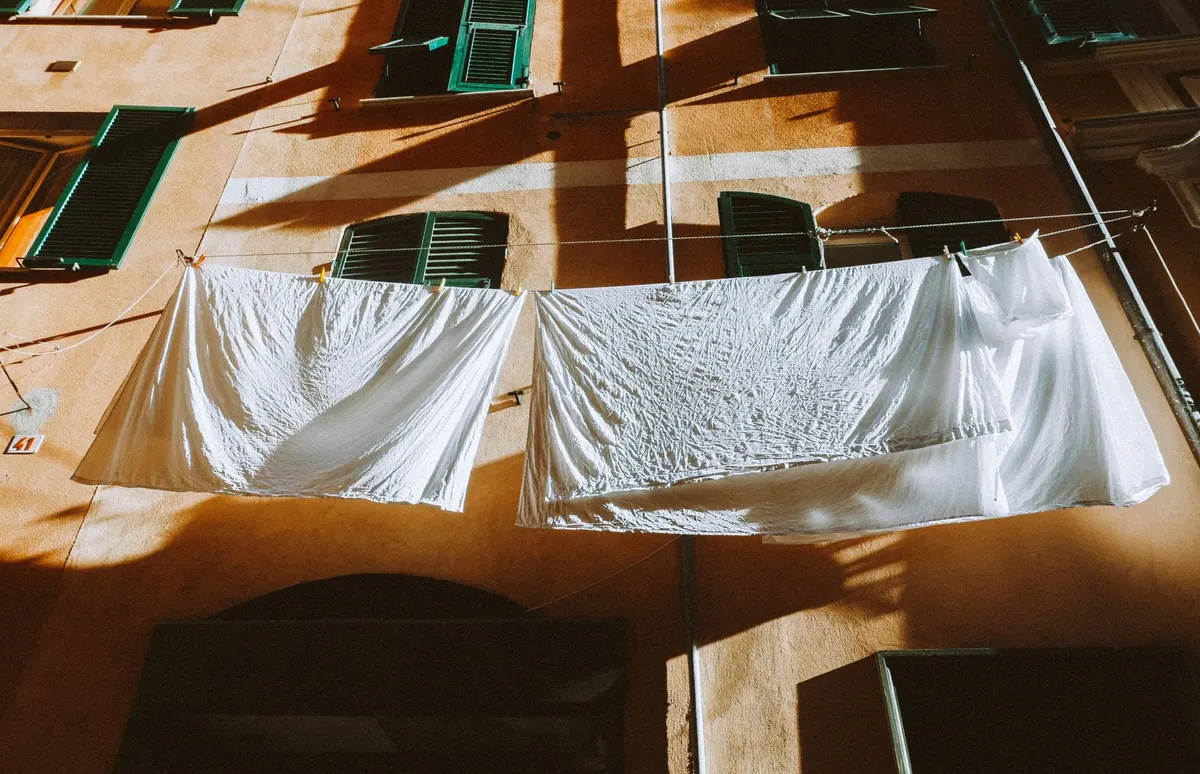
Line dry in the shade if you can. Strong summer sun will fade colour and can leave linen feeling brittle. Indoors, a drying rack in a ventilated room is ideal; draped over a hot radiator is not. Peg sheets at the corners and seams rather than across the middle of the fabric, and take everything in while it is still very slightly damp.
If you use a tumble dryer, keep it on low heat or a no-heat airing setting and stop the cycle while the bedding is still a touch damp. High heat is the quickest way to shrink linen. Better still, ten minutes on low to soften the fibres, then finish on the line or rack.
Ironing, storing and keeping it soft
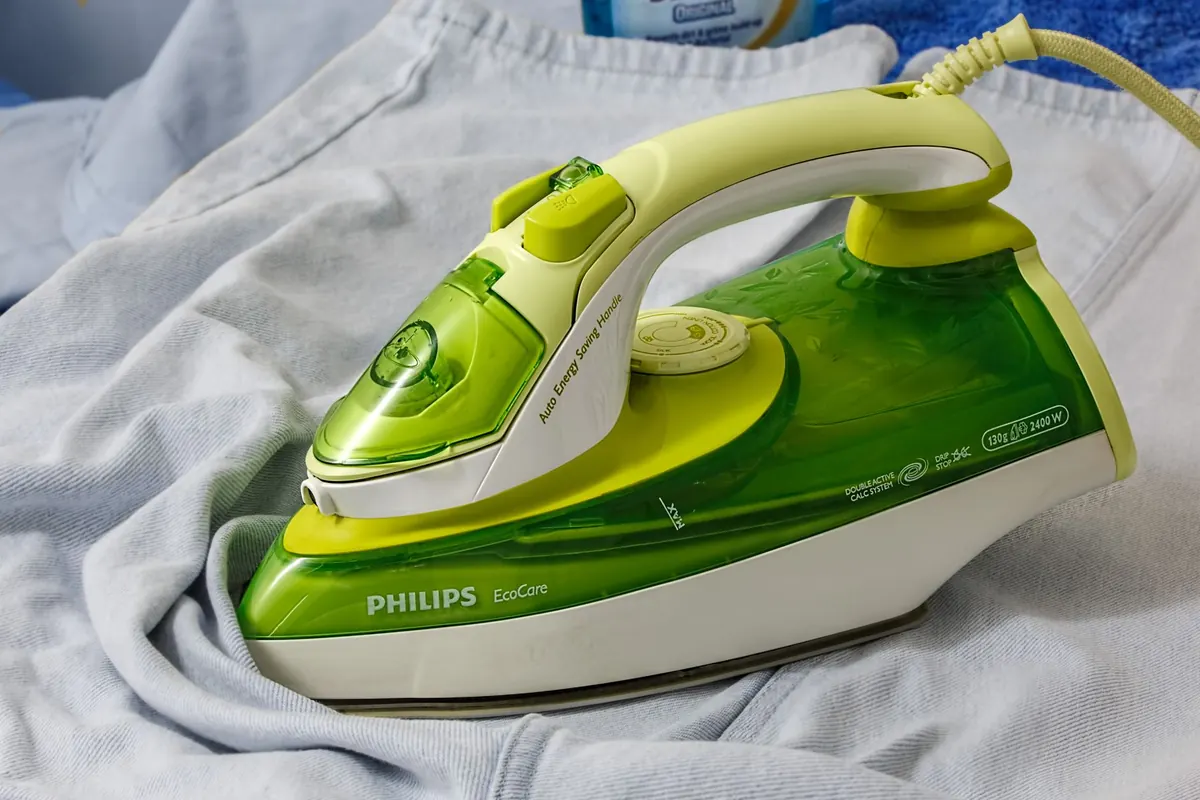
You do not have to iron linen bedding. The soft crumple is part of its character, and a sheet that has been line dried and stretched back into shape looks perfectly presentable. If you prefer a crisper finish, press while the linen is still damp, or use plenty of steam on a medium setting. A hot, dry iron on bone-dry linen will only set creases in.
Store folded bedding in a dry airing cupboard rather than a plastic bag, which traps damp. Two or three sets in rotation will each last longer than one set washed twice as often, and the fibres get a proper rest between uses.
A routine that keeps bedding true to size
Strip the bed, wash at 30°C on a gentle cycle with a mild liquid detergent and no conditioner, keep the drum half full, and unload the machine the moment it finishes. Shake, reshape, dry in the shade or on a rack, and bring it in while barely damp. Tumble on low only if you want it softer.
Do that and your linen will do what it is supposed to: soften, breathe and stay where you put it. One last thing — the care label on your particular set always wins. Mills finish their cloth differently, so if it says 40°C or line dry only, follow it. And if a sheet does come out of the wash a little snugger than before, use it while still slightly damp and stretch it back over the mattress; linen has some give in it yet.
You Might Also Like
Practical ways to use linen bedding and pyjamas, plus a ventilation routine, to sleep comfortably through a British heatwave.
A practical guide to storing towels, bath mats and laundry in a compact UK bathroom — keeping everything dry, tidy and easy to reach without a bigger room.